
Every candidate for the Lok Sabha or a state Assembly swears an affidavit declaring their criminal cases, assets, liabilities and education. It is public, and the most direct way to know your candidate before voting.
What the affidavit declares
Form 26 is filed with the nomination papers under Rule 4A of the Conduct of Elections Rules, 1961. The current version, revised in 2019, covers:
- pending criminal cases, which the form asks for in full, with the court, the sections of law and whether charges have been framed;
- convictions, with the punishment;
- assets and liabilities of the candidate, spouse and dependants, including assets abroad;
- income from tax returns for the last five years, and sources of income;
- the highest educational qualification, with the institution and year.
Criminal cases must be in bold, and party candidates must confirm they have told their party. Part B summarises the totals.
Where to find it
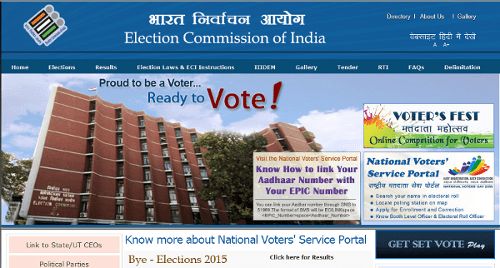
On your phone, use ECINET, the Election Commission’s all-in-one app, launched on 22 January 2026. The Know Your Candidates (KYC) module now sits inside it, under the Conduct of Elections tab, with each candidate’s full affidavit.
On a computer, use the candidate affidavit portal: filter by election, state and constituency, or search by name. It holds affidavits back to 2019.
The Returning Officer must display each affidavit on the notice board the day it is filed, give a free copy on request, and put it online within 24 hours.
What the Supreme Court added
The Supreme Court in Union of India v Association for Democratic Reforms (2002) held that the voter’s right to know is part of free expression under Article 19(1)(a) of the Constitution. In PUCL v Union of India (2003) it struck down Section 33B of the Representation of the People Act, 1951, which narrowed it.
Public Interest Foundation v Union of India (2018) added bold type, disclosure to the party, and publicity by candidate and party in local newspapers and electronic media at least three times after nominations.
Rambabu Singh Thakur v Sunil Arora (2020) made parties publish, within 48 hours of choosing a candidate with pending cases, why they chose that person, citing merit, not mere “winnability”. Brajesh Singh v Sunil Arora (2021) dropped an alternative two-week deadline, so the 48 hours now run from selection, and ordered the Commission to build the app that became KYC.
During the campaign
The Commission’s instructions, restated in September 2026, set three windows for a candidate’s notices about criminal cases at Lok Sabha and Assembly elections: the four days after the last date for withdrawal, days five to eight, and day nine to the end of campaigning.
Look for newspaper and TV notices headed “Declaration about criminal cases”, published by the candidate (Format C-1) or the party (Format C-2). A candidate’s notices appear in their election expenses account.
How to read it fairly
A pending case is not a conviction. It does not disqualify: the Supreme Court held in 2018 that only Parliament can add that ground, and noted that false cases are sometimes filed against candidates. Disqualification follows certain convictions.
Read each case’s sections of law and description, which show what is alleged, and whether charges have been framed.
Compare assets with earlier affidavits, remembering that the form uses current market values and lists inherited property separately.
For anything important, check the affidavit: the Commission says the sworn form prevails over its app’s data. If no candidate satisfies you, NOTA lets you record that.
If an affidavit is false
Under Section 125A of the Representation of the People Act, 1951, withholding, falsifying or concealing information in the affidavit is punishable with up to six months in prison, a fine, or both.
Under the Commission’s instructions, the Returning Officer must reject a nomination if no affidavit is filed, or if blanks are not filled after notice, but should not reject it merely because the affidavit is said to be false. That line is being tested: in June 2026 a Returning Officer rejected a Rajya Sabha nomination for leaving out a pending case, and the rejection is being challenged in an election petition.
Anyone with contrary evidence can file a sworn counter-affidavit, which is displayed alongside it. After the result, any candidate or voter in the constituency can challenge the election in the High Court within 45 days, under Section 81 of the Representation of the People Act, 1951. Who may bring a criminal complaint under Section 125A is disputed: the Commission has said any aggrieved person can, but the Karnataka High Court held in 2025 that only the Commission may, and an appeal is pending in the Supreme Court.
Find your constituency, current representative and past results →