
If you have never been on the electoral roll, registration runs on Form 6: the application for inclusion of a name in the roll. It is free, it can be done online, and the card is posted to you at no cost.
Who can apply
You can register if you are an Indian citizen, are 18 or older on the qualifying date, and are ordinarily resident in the constituency you are applying in.
“Ordinarily resident” means where you actually live, not where you own property or where your family is from. A student living in a hostel, a worker in a rented room; both are ordinarily resident where they live.
Form 6 is specifically for first-time inclusion. If you are already registered somewhere and have moved, you need Form 8 instead: see changing your address. Filing Form 6 when you should have filed Form 8 creates a duplicate entry, which is a problem rather than a shortcut.
What you need before you start
- Proof of age: typically a birth certificate, school leaving certificate, or another document accepted by the Election Commission.
- Proof of ordinary residence: a self-attested copy of a listed document in your own name, or in the name of a parent or spouse if the address is theirs.
- A recent passport-size colour photograph, 4.5 cm × 3.5 cm, on a white background, unsigned. Signing the photo is a routine reason for rejection.
- A mobile number and email for status updates. To file online you also need access to the mobile number linked to your Aadhaar, for the e-sign described below.
Aadhaar details are requested for authentication of entries. If you do not have an Aadhaar number, there is an option on the form to declare that; it is not a barrier to registering. Filing online does use Aadhaar, for the e-sign described below, so without it you file on paper.
How to file it
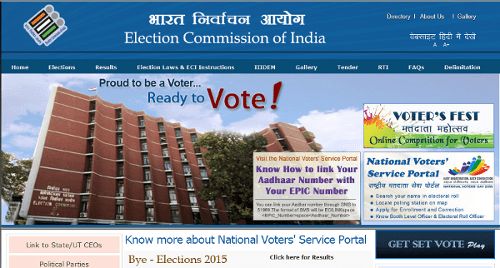
- Go to the Election Commission’s ECINET Citizen Service Portal at voters.eci.gov.in and create an account with your mobile number.
- Open Form 6.
- Fill in your details, the constituency you are applying in, and your address exactly as it appears on your residence proof, including the PIN code.
- Upload the photograph and your documents.
- E-sign and submit, then keep the reference number.
Since September 2025, online applications on Forms 6, 7 and 8 have been signed with an Aadhaar e-sign. A one-time password goes to the mobile number linked to your Aadhaar, which may not be the number you registered on the portal with, and on Form 6 you enter your name exactly as it appears on your Aadhaar. The portal says using the e-sign is optional, and that if you do not use it you can hand in the paper form instead. That is the way to apply if you have no Aadhaar number or no mobile number linked to it. If the names do not match, the portal tells you to refill the form with your name as on Aadhaar, or to submit it on paper.
You can file on paper instead, through your Booth Level Officer or the Electoral Registration Officer for your constituency. The blank form is available as a PDF from the ECI. In states covered by the Special Intensive Revision, add the Declaration Form described below; it is not part of this PDF.
The form may be filled in English or in the official language of your state, and the language you choose cannot be a ground for rejection.
Where the Special Intensive Revision applies
The Election Commission has been preparing the rolls afresh, in phases, in a Special Intensive Revision. By September 2026 it had been held, or was under way, in every state and Union territory except four: Assam had a separate special revision instead, and the Commission has said it will announce dates for Himachal Pradesh, Jammu and Kashmir and Ladakh later. See how electoral roll revision works.
Where the revision has been held or is under way, the Commission’s instructions add a Declaration Form to Form 6, and to Form 8 for anyone moving in from another state. It asks for your parents’ names and, if you are married, your spouse’s, with their EPIC numbers if available; whether your own name, or a parent’s or grandparent’s, was on the roll of your state’s last intensive revision (in most states, one held between 2002 and 2006), and if so where; and for a declaration that you have not acquired another country’s citizenship. The portal’s “Search Your Name in Last SIR” service can help you find an old entry.
Online, these questions are part of Form 6, and the portal also has a “Fill Declaration Form” option. On paper, ask your Booth Level Officer for the Declaration Form: it is not part of the printable Form 6 on the Commission’s portal.
If your details cannot be matched with that roll, the Electoral Registration Officer will send a notice asking for documents showing your date or place of birth. If you were born in India before 1 July 1987, that means your own; if between 1 July 1987 and 2 December 2004, yours and one parent’s; if later, yours and both parents’, plus a copy of the passport and visa, valid when you were born, of any parent who is not Indian. People born abroad, or who became citizens by registration or naturalisation, give different proof. These dates follow the cut-offs for citizenship by birth in Section 3 of the Citizenship Act, 1955.
The Commission’s list of documents is indicative rather than complete. It includes a birth certificate, a passport and a matriculation or other educational certificate. Aadhaar is accepted as proof of identity, not of citizenship.
If your name was left off a draft roll because your enumeration form was not returned, the Commission’s instructions are to apply on Form 6 with the Declaration Form during the claims and objections period, even though you were registered before.
What happens next
Your application is verified, usually by a Booth Level Officer visiting the address. If it is approved, your name is added to the roll and an EPIC is issued.
The EPIC is delivered free of cost by speed post to the address on the application. Nobody should be charging you for it. If someone offers to “get your voter ID made” for a fee, they are selling you something that is free.
Track progress with your reference number on the same portal. Timelines vary by state and by whether a roll revision is under way.
If you have no documentary proof of residence
The process explicitly accommodates people who cannot produce address documents. Homeless citizens living in sheds or on pavements, and sex workers without documentary proof, are enrolled on the basis of field verification instead. Not having a tenancy agreement does not disqualify you from voting.
One warning worth taking seriously
The declaration on Form 6 is a legal statement. A false declaration is punishable under Section 31 of the Representation of the People Act, 1950, with imprisonment of up to one year, a fine, or both.
In practice this matters most for the “first time” declaration. If you are already on a roll elsewhere and declare otherwise to get a second entry, that is the offence. Update your existing entry instead.
After you are registered
Confirm your name appears on the roll, note your part and serial number, and check which polling booth you are assigned to before polling day.
Correction, 24 September 2026: This article previously did not say that where the Special Intensive Revision has been held or is under way, applicants on Form 6 also need a Declaration Form. We have added that, and a section on where the revision applies. It also did not say that online applications are signed with an Aadhaar e-sign, and that anyone who cannot use it can apply on paper. We have added that too.
Find your constituency, current representative and past results →India वोट Kar Editorial Team
Published 31 August 2026 · Last updated 24 September 2026