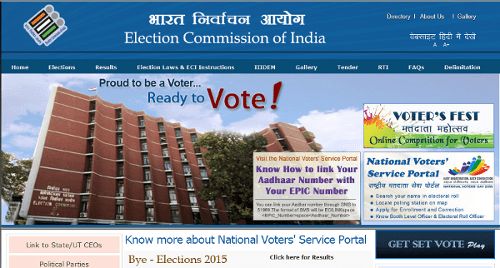

Moving house is an easy way to lose your vote. Your entry does not move with you: it stays at the old address until you shift it, and on polling day you are expected at a booth you may no longer live anywhere near. Leave it long enough and it may be deleted because you no longer live there.
The fix is Form 8, under the heading “shifting of residence”. It moves your existing entry, so you do not file Form 6 as well. The exception is if a Special Intensive Revision has already left you off the draft roll, as explained below.
Why not Form 6
Form 6 is the application for new voters. Its declaration says you are applying for the first time and are not on the roll of any constituency. If you are already registered, that declaration is untrue, and knowingly making a false declaration is an offence under Section 31 of the Representation of the People Act, 1950, punishable with up to a year in prison, a fine or both. You could also end up with two entries, which Sections 17 and 18 of the same Act do not allow, and one or both are likely to be deleted.
Form 8 moves your existing entry. That is what you want.
The part people get wrong
The application goes to the Electoral Registration Officer of the constituency you have moved to, not the one you left.
This is counter-intuitive. Your instinct is to tell your old officer you are leaving. But the new ERO is the one who has to satisfy themselves that you are now ordinarily resident in their constituency, and it is their decision to make. Filing at the old constituency sends it to someone with no authority to add you anywhere.
If you file online, selecting the correct new state, district and Assembly constituency routes it correctly.
What you need
- Your EPIC number: this identifies the entry to be moved.
- Self-attested proof of your new address, in your own name, or in the name of a parent, spouse or adult child who is already registered as a voter at that address.
- The full new address with PIN code.
You do not need a new photograph. Changing your photo counts as a correction, which is a separate Form 8 application.
How to file it
- Sign in at voters.eci.gov.in.
- Open Form 8.
- Select shifting of residence. Form 8 covers four different things: shifting, correction of entries, replacement of EPIC, and marking as a person with disability. Tick only one; on paper, strike out the sections you are not using. If you also need a correction, file a separate Form 8.
- Enter your new address and upload the proof.
- E-sign and submit, then keep the reference number.
Online Form 8 is signed with an Aadhaar e-sign: a one-time password goes to the mobile number linked to your Aadhaar, and the name on your voter entry must match the name on your Aadhaar. The portal says using the e-sign is optional, and that if you do not use it you can hand in the paper form instead. That is the way to apply if you have no Aadhaar number or no mobile number linked to it. If the names do not match, the portal points you to the name correction option or your Booth Level Officer, or to filing on paper.
The paper form is available as a PDF from the ECI and can be given to your Booth Level Officer or the Electoral Registration Officer’s office.
What happens to your old entry
Once the new ERO approves the shift, the old entry is removed. You end up with one entry, at your current address, and your EPIC number normally stays the same: it identifies you, not your address. The form also asks for a replacement card showing the new address, in return for your old one.
Your part number, serial number and polling station will usually change, because those describe your position in the new roll. Check them again afterwards.
Moving within the same constituency
Still Form 8, still shifting of residence. Your constituency has not changed but your polling station probably has, since booths are assigned by locality. It is a smaller change, but an unupdated address can still send you to the wrong booth.
Moving where the Special Intensive Revision applies
The Election Commission has been preparing the rolls afresh, in phases, in a Special Intensive Revision. Where it has been held or is under way, the Commission’s instructions add a Declaration Form to Form 8 if you are moving in from another state. It is the same form that goes with Form 6 for new voters: see applying for a voter ID for what it asks. A move within the same state needs Form 8 alone. Online, the portal’s Form 8 section has a “Fill Declaration Form” option; on paper, ask your Booth Level Officer for it.
The revision can also take you off the roll before you file anything. Booth Level Officers take an enumeration form to every voter at the address on the roll. If you have moved and your form is not returned, your name is left out of the draft roll, often marked as shifted. The Commission’s instructions are then to apply on Form 6 with the Declaration Form, for your new address, during the claims and objections period. So if you are off the draft roll you use Form 6, even though you were registered before. If you are still on it, a move is an ordinary Form 8 application.
If you have moved recently and a revision is under way, check the draft roll as soon as it is published, so that you can apply within the claims period. See how electoral roll revision works.
Timing
Do this as soon as you move. Under Section 23(3) of the Representation of the People Act, 1950, no change can be made to a constituency’s roll from the last date for nominations until the election is over, and polling day always falls more than two weeks after that date. A shift filed a fortnight before polling day cannot take effect for that election.
Afterwards, confirm the new entry on the roll and look up your new polling booth.
Correction, 24 September 2026: This article previously said a registered voter who moves never files Form 6 again. Where a Special Intensive Revision has left a voter off the draft roll, the Election Commission’s instructions are to apply on Form 6 with the Declaration Form. It also did not say that in those areas Form 8 for a move from another state needs the Declaration Form too. We have added a section on both, and that online applications are signed with an Aadhaar e-sign, with paper as the alternative. We have also corrected whose documents can prove your new address, and what the offence is when a registered voter knowingly files Form 6: it is the false declaration. We have removed statements that an application with more than one option ticked is rejected and that moving is the most common reason voters cannot vote, and made clear that a new photograph needs a separate Form 8.
Find your constituency, current representative and past results →India वोट Kar Editorial Team
Published 10 September 2026 · Last updated 24 September 2026