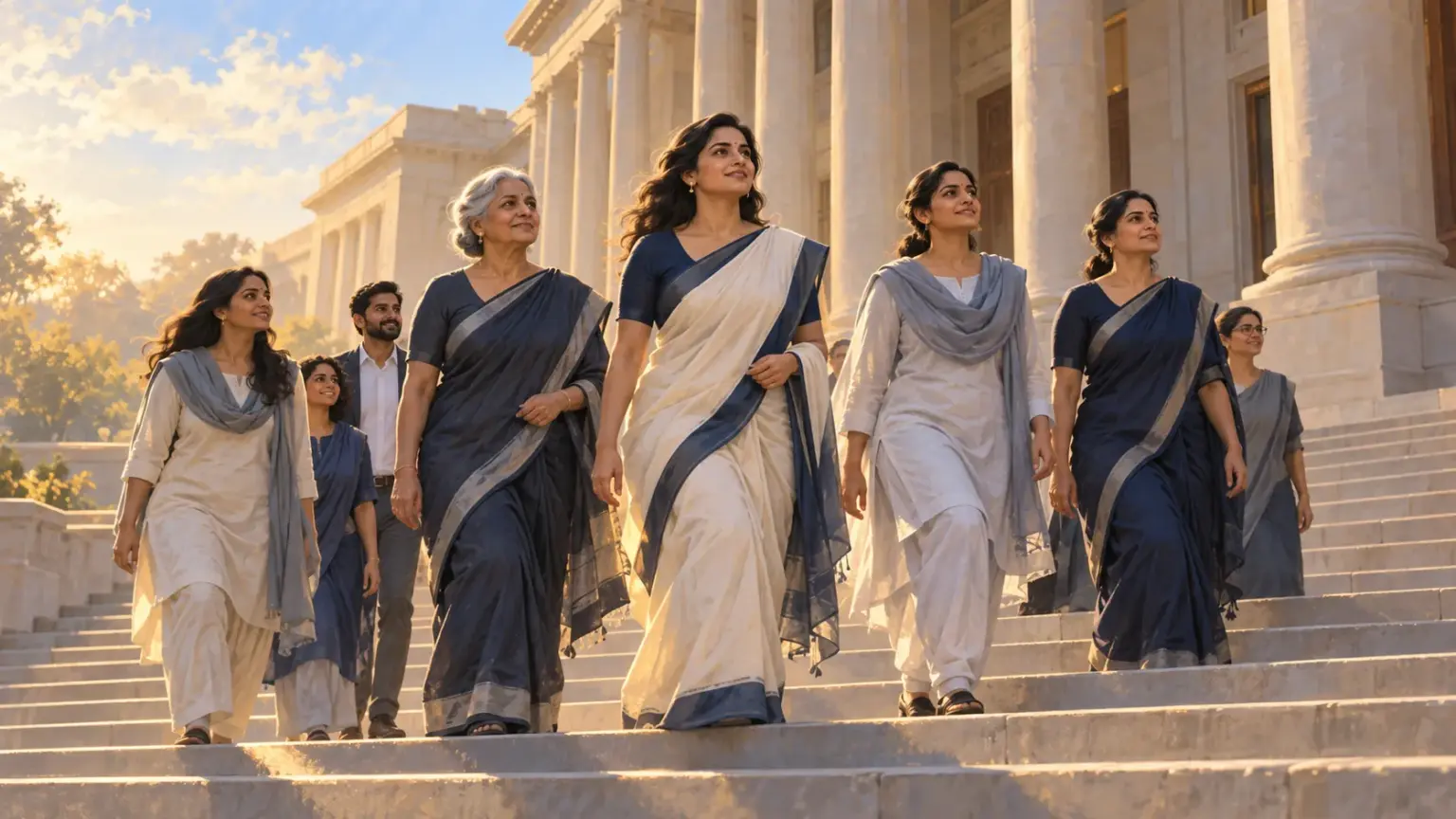
A 2023 amendment to the Constitution reserves about one-third of the seats in the Lok Sabha and the state Legislative Assemblies for women. It has been in force since 16 April 2026, yet no seat is reserved today.
The amendment carries its own trigger: women’s reservation begins only once the next census figures are published and a delimitation exercise has been undertaken for the purpose. The census has begun; the delimitation has not.
What the amendment reserves
The Constitution (One Hundred and Sixth Amendment) Act, 2023, known as the Nari Shakti Vandan Adhiniyam, inserted three reservation provisions:
- Article 330A, for the Lok Sabha;
- Article 332A, for the Legislative Assembly of every state;
- sub-clauses (ba) to (bc) of Article 239AA(2), for the Legislative Assembly of Delhi.
In each, as nearly as may be, one-third of the seats filled by direct election are reserved for women. Within that third, about one-third of the seats already reserved for Scheduled Castes and Scheduled Tribes go to women from those communities.
As with those seats, reservation limits who may stand, not who may vote.
Why no seat is reserved yet
Article 334A of the Constitution sets the order. First, the relevant figures of the first census taken after the amendment commenced must be published; then a delimitation exercise must be undertaken for this purpose.
The amendment itself commenced only on 16 April 2026, the date the Central Government appointed by notification. Article 334A(4) also leaves the sitting House or Assembly untouched until it is dissolved.
The next census, Census 2027, is in progress. Its population count has a reference date of 1 March 2027 for most of the country, 5 January 2027 for Goa, Punjab, Uttar Pradesh and the rest of Uttarakhand, and 1 October 2026 for Ladakh and snow-bound areas of Jammu and Kashmir, Himachal Pradesh and Uttarakhand.
Once its figures are published, Articles 82 and 170 leave it to Parliament to decide by law who redraws the seats, and how. No law for the next delimitation has been passed.
The attempt to bring it forward
On 16 April 2026 the government introduced the Constitution (One Hundred and Thirty-first Amendment) Bill, 2026, with two companion Bills, including a Delimitation Bill. They would have enlarged the Lok Sabha and allowed delimitation on the 2011 census, with the reservation to follow.
On 17 April the amendment Bill won 298 votes to 230 in the Lok Sabha: a majority, but short of the two-thirds of members present and voting that Article 368 requires. It failed, and the government told the House the same day that it would not proceed with the other two Bills.
As of late September 2026 no replacement has been introduced, though the government has been reported to be weighing a fresh attempt. Until the Constitution is amended again, the 2023 timeline stands.
How long it lasts
Article 334A ends the reservation 15 years after the amendment’s commencement. Read literally, that means April 2041, however late the first reserved seats arrive, although some commentators read the 15 years as running from the first election with reserved seats. Parliament can set by law a later date until which the seats continue. Seats rotate after each later delimitation, as Parliament provides by law.
What it does not cover
- The Rajya Sabha and the state Legislative Councils: the new articles deal only with the Lok Sabha and the Legislative Assemblies.
- A separate quota for Other Backward Classes: the only share set aside within the one-third is for Scheduled Caste and Scheduled Tribe women.
- The Puducherry and Jammu and Kashmir Assemblies, though separate laws passed in December 2023 apply the same scheme there.
The precedent in panchayats and municipalities
Since the 73rd and 74th Amendments took effect in 1993, Articles 243D and 243T of the Constitution have reserved at least one-third of the directly elected seats in every panchayat and municipality for women.
That is a floor, and more than 20 states have raised it to half in panchayats, according to the Ministry of Panchayati Raj. The rule for the Lok Sabha and Assemblies is one-third as nearly as may be, not at least one-third.
Find your constituency, current representative and past results →