Assistance at the polling booth is provided as a matter of course, but much of it depends on your entry being marked as a person with disability on the electoral roll. Without that marking the Election Commission does not know you need anything, and the facilities that require advance planning cannot be arranged.
Get your entry marked first
PwD marking is the fourth purpose of Form 8, the same form used for corrections and address changes. Tick only that purpose; an application with several options selected is rejected. See correcting your voter ID details for how to file it.
Do this well ahead of an election. Rolls are frozen before polling, and a marking applied a fortnight beforehand will not be in place in time.
What is available at the booth
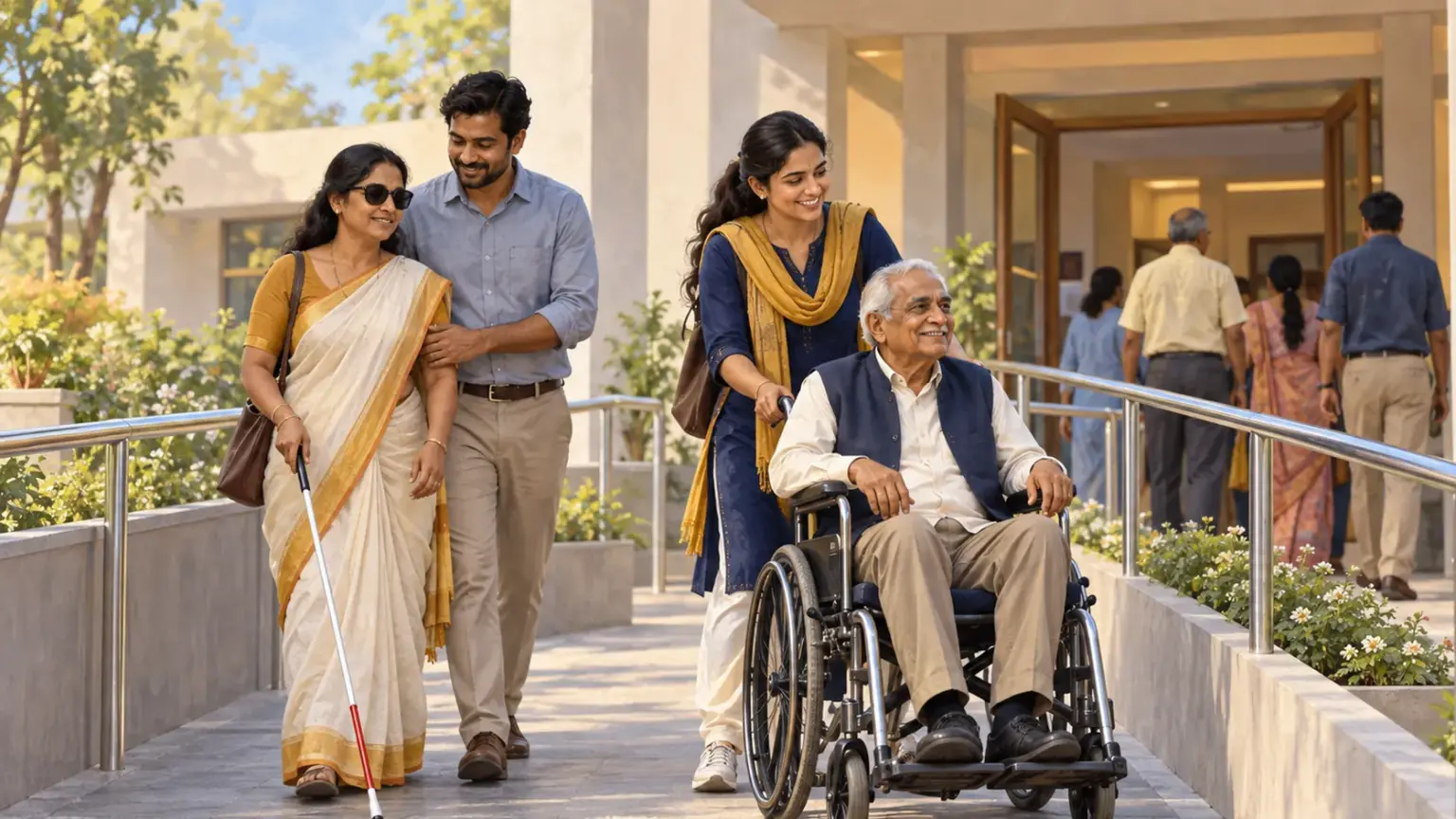
- Ramps. Polling stations are required to be on the ground floor with ramp access.
- Wheelchairs on request at the station.
- Priority entry, so you do not queue.
- Braille features on the ballot unit, and braille voter slips in many states.
- Transport to and from the booth, arranged in many constituencies.
- A companion. An elector unable to operate the machine may take a companion into the voting compartment, with the presiding officer’s approval. The companion must be 18 or over and may assist only one voter in that election.
Ask on arrival rather than waiting to be offered. Staff cannot see from the roll alone what you need on the day.
Voting from home
Electors marked as persons with disability who meet the benchmark disability threshold may vote by post, usually delivered as home voting: a polling team visits your address with the ballot, on a schedule shared with candidates so their agents can accompany it.
Applying means filing Form 12D through your Booth Level Officer, with a disability certificate attached, and it must reach the Returning Officer within five days of the election notification. Full detail is in our guide to postal ballots and absentee voting.
Choosing this route means giving up voting in person for that election. It is one or the other.
Older voters
Electors aged 85 and above qualify for the same postal and home-voting facility, without needing a disability marking. The threshold was originally set at over 80 and was later raised, so older guidance you may come across is out of date.
Priority entry at the booth is generally extended to elderly voters regardless of age marking.
The Saksham app
The Election Commission publishes an accessibility app, Saksham, for requesting a wheelchair, checking facilities at your booth and registering as a PwD elector. Availability of individual features varies by state and election.
If you are turned away or unassisted
Every polling station has a presiding officer responsible for these decisions. Ask for them by name of office. Party agents at the booth are not officials and have no authority over who votes or what assistance is given.
The national voter helpline is 1950. Facilities are set per election by the Election Commission and by your state’s Chief Electoral Officer, so confirm the current position at eci.gov.in rather than assuming last time’s arrangements carry over.
Find your constituency, current representative and past results →