

What Is NOTA and What Does It Actually Do?
NOTA lets you reject every candidate on the ballot. What it does not do is change who wins, and that distinction matters.
NOTA lets you reject every candidate on the ballot. What it does not do is change who wins, and that distinction matters.
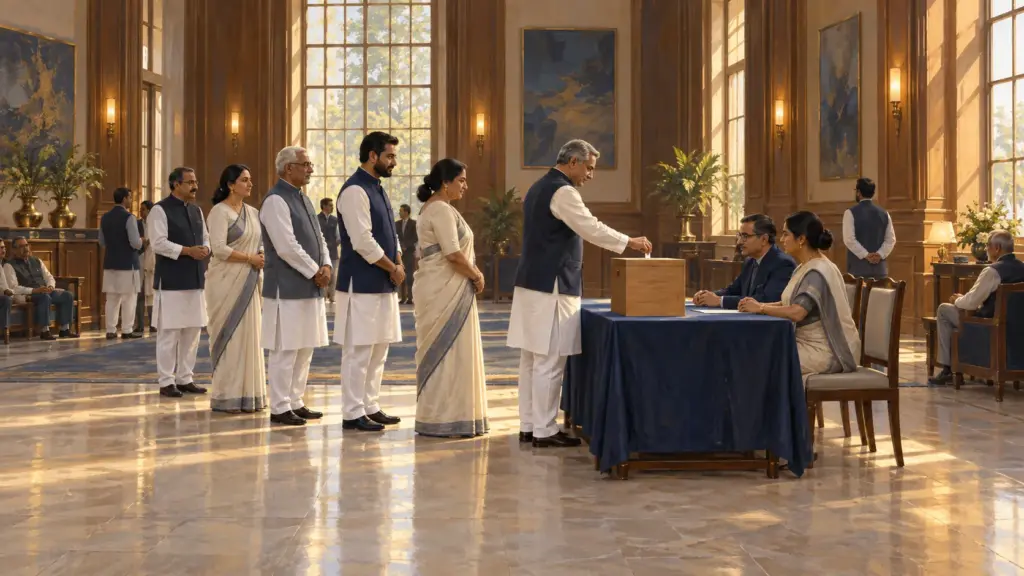
They are MPs, but you never see them on your ballot. Your MLA votes for them, by single transferable vote, on an open ballot.

Both are elected representatives, but they sit in different houses, make different laws, and answer for very different things.

Every party registers. Only a few are recognised, and only the recognised ones get a reserved symbol. That distinction decides a lot.

The rules that bind parties, candidates and governments from the moment an election is announced. It is not a law, and that matters.

An Assembly constituency is the geographic unit that elects one MLA. Understanding it explains most of what confuses people about Indian election results.

One vote, one constituency, one winner. A plain-language tour of how India actually elects its legislatures.

Two separate restrictions, often confused. One silences campaigning for 48 hours. The other silences exit polls for weeks.

Article 356 suspends a state government. The Bommai judgment tightened it considerably, and use fell sharply afterwards.

The Election Commission is a constitutional body, not a government department. What it controls, and the things it deliberately does not.

An electoral college of elected MPs and MLAs, with votes of different values, counted by single transferable vote.

Redrawing constituency boundaries and reallocating seats. India froze it on 1971 figures, and that freeze is now expiring.